What makes it 3D

Real depth, not an illusion
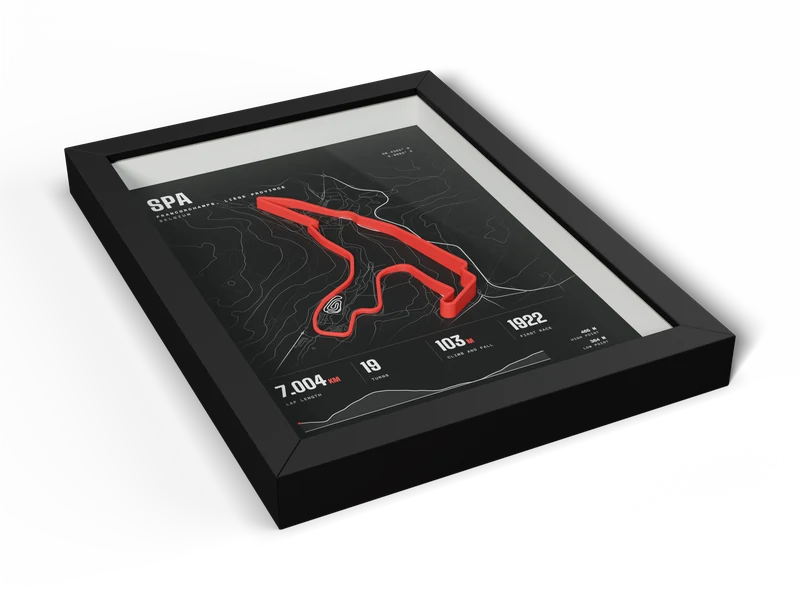
The track is a printed object that stands off the map. Walk past and you see the climbs and drops change.
Shaped by real data
Every rise follows the circuit’s measured elevation, exaggerated so it reads on the wall. Nürburgring Nordschleife climbs about 293 m in real life.
Fine layers
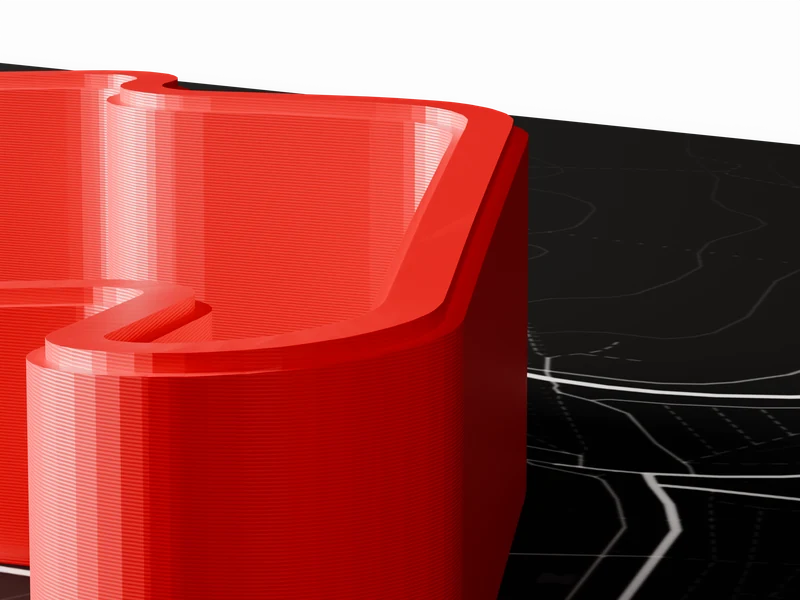
Printed in PLA at 0.08 mm layers, so the top surface is smooth and the edges stay crisp.
Framed, ready to hang
A deep black frame with low-reflection glazing, a hook and adhesive strips in the box.
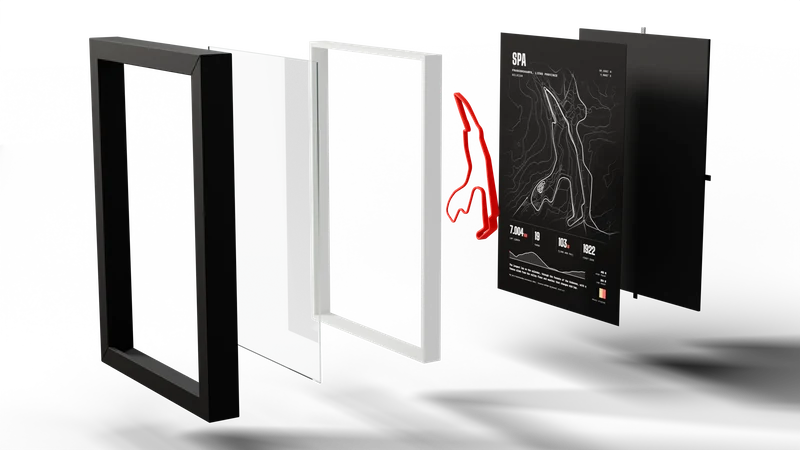
  • An exploded view of the frame standing upright, with the frame, glass, spacer, 3D-printed track, art print and backing board pulled apart in a row.
    Every layer, pulled apart.
  • Close-up of the side wall of the printed track showing fine horizontal layer lines.
    Printed layer by layer, 0.08 mm at a time.
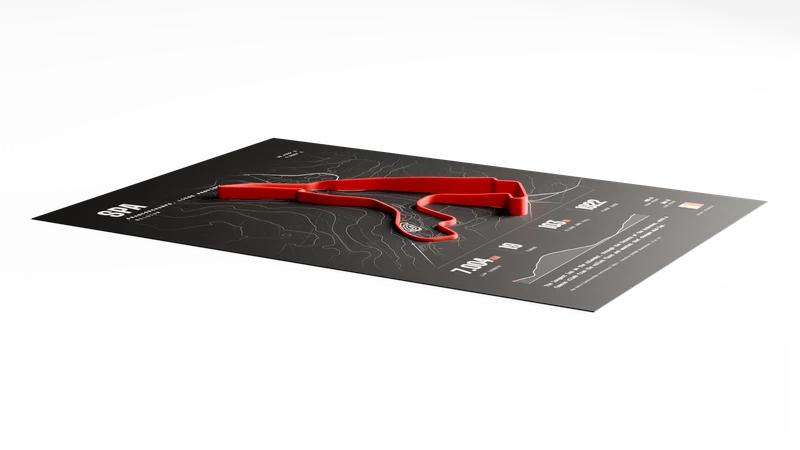
  • The red 3D-printed track on the art print seen from a low angle, so its changing height is visible along the lap.
    The track rises and falls with the real hills.

Popular circuits

All 16

Questions

Is it really 3D?

Yes. The track is a physical 3D print with height, mounted over a printed map of the circuit, not a lenticular or printed-shadow effect.

What is it made of?

The track is printed in PLA, set onto a printed map, behind glazing in a black frame.

How do I hang it?

Each frame comes with a sawtooth hook and adhesive strips, plus a card that shows you how.

How do I look after it?

Dust the frame with a dry soft cloth and keep it out of strong direct sun and away from heaters.

Can you make a different place?

Yes, as a custom request: other circuits, karting tracks and running or cycling routes. Ask for a custom piece.

Want to know a circuit before you choose? Read the F1 track guides.